Sneaker Drop Brand Strategy: What India's Market Needs to Know

By Bindu Sharma, CEO, World One Consulting | The Blueprint

There was a queue outside a sneaker store on Fifth Avenue at seven in the morning. On a Tuesday. The NYPD had been called. The shoe that caused it retailed for $195 and resold for over $1,200 by the end of the day.
That shoe was the Vans x Satoshi Nakamoto Era 95 "Gems" - and it is one of the clearest demonstrations of sneaker drop brand strategy in recent memory: how scarcity, design conviction, and cultural specificity combine to turn a product into a cultural event. The drop scored 99 out of 100 on industry heat trackers and briefly shut down one of New York's most prominent retail corridors.
For retail brands operating in India or entering India now, the implications are direct. The Indian sneaker market sits at $4 billion today and is projected to reach $6 billion by 2030, with a homegrown brand movement building on exactly the dynamics this drop illustrates.
This piece is drawn from Retail Detail Deep Dive Podcast.
Subscribe to the weekly newsletter at world-one.beehiiv.com.
The Name Behind the Drop
Before the shoe, the name. Satoshi Nakamoto is the pseudonym used by whoever created Bitcoin. The white paper was published in 2008. Bitcoin followed. Then Satoshi went dark in 2010, leaving behind an estimated 1.1 million untouched bitcoins worth approximately $135 billion at recent prices, and one of the internet era's most enduring unsolved mysteries.
April 2026 brought two significant attempts to answer the question. The New York Times published an investigation naming a British cryptographer as the likely candidate - he denied it. Almost simultaneously, a documentary called Finding Satoshi released on April 22nd, four years in the making, concluded using blockchain forensics and linguistic analysis that Satoshi was not one person but two: Hal Finney and Len Sassaman, working together.
So the name Satoshi Nakamoto was already saturating newsrooms when a Los Angeles design collective, who had deliberately named themselves after the Bitcoin creator as a statement about anonymity and decentralisation, released a collaboration with Vans. The collision of cultural contexts was not accidental. It was precision.
What the Shoe Actually Does
The Era 95 "Gems" features a black canvas upper designed to wear away over time, revealing a checkerboard underlay beneath. Sandblasted beads, pearl embellishments, distressed finishes: the detailing is closer to jewellery than footwear. The more you wear it, the more it transforms. The final look is the wearer's, not the brand's.
That design language carries a direct philosophical statement: just as Satoshi Nakamoto removed the central authority from money, this collective removes the brand as the final authority over what the product looks like. The brand's role becomes initiating a process, not completing it. The consumer completes it.
This ran through Vans' OTW imprint (Off The Wall), a curator-led, limited-release line distinct from the everyday Vans sold at the mall. The result: 99/100 heat score, secondary market premium of nearly 4x retail, and a Fifth Avenue store closed by the NYPD.
Two Hundred Years of Rubber Soles — How Sneakers Became Assets
Understanding April 2026 requires going back to the 1830s. Hard leather soles were loud: they clicked on pavement. Rubber soles were silent. You could move without being heard. That is, literally, where the word "sneaker" originates. The Boston Journal used the term as early as 1887. Advertising agent Henry Nelson McKinney popularised it in 1917 specifically for that silent-sole quality.
Milestone 1 — The First Name on a Shoe (1922)
Chuck Taylor walked into Converse with feedback on their basketball shoe, proposing changes for flexibility and ankle support. Converse put his name on the ankle patch. One athlete. One name. One shoe. And suddenly a product carried meaning beyond its function. You were not just buying a shoe. You were buying the person attached to it. Every celebrity collaboration that followed operates on the same logic.
Milestone 2 — When Sneakers Became Culture (1980s)
In 1985, Nike signed Michael Jordan. The Air Jordan 1 broke NBA colour rules: the league fined Nike $5,000 per game. Nike paid the fines and turned the ban into the campaign. The shoe became a symbol of rebellion before it became a symbol of status. One year later, Run-D.M.C. released "My Adidas" with no endorsement deal — pure cultural love for a product. Adidas signed them after watching a Madison Square Garden crowd hold up their own Adidas in response. No one planned it.
Milestone 3 — The Drop as a Business Model (2005)
Designer Jeff Staple created the Nike SB Dunk "NYC Pigeon": 150 pairs. The New York release caused a riot. Resale values went from $200 to thousands immediately. That single drop invented the modern playbook: artificial scarcity, timed release, extreme demand, immediate secondary market. GOAT launched in 2015, StockX in 2016, bringing authentication, price transparency, and a functional exchange for shoes. Virgil Abloh's "The Ten" in 2017 collapsed the distinction between streetwear, luxury, and sneaker culture. The global resale market exceeded $10 billion by 2021.
What India Is Building Right Now- Sneaker Drop Brand Strategy India
India's sneaker market sits at approximately $4 billion today, a fraction of the $100 billion global industry, but with a growth trajectory that commands attention. The market is projected to approach $6 billion by 2030, and a distinct homegrown movement is emerging to claim it.

The strongest momentum is concentrated in the accessible premium segment between ₹4,000 and ₹9,000. This is the price point where design-conscious consumers, primarily Gen Z and younger millennials, are seeking brand identity, cultural storytelling, and quality, not just function. Five years ago, sneakers in India were gym-wear. Today they are a mainstream lifestyle category, sneaker drop brand strategy India in many urban markets is outpacing formal footwear in demand.
Brands building in this space include:
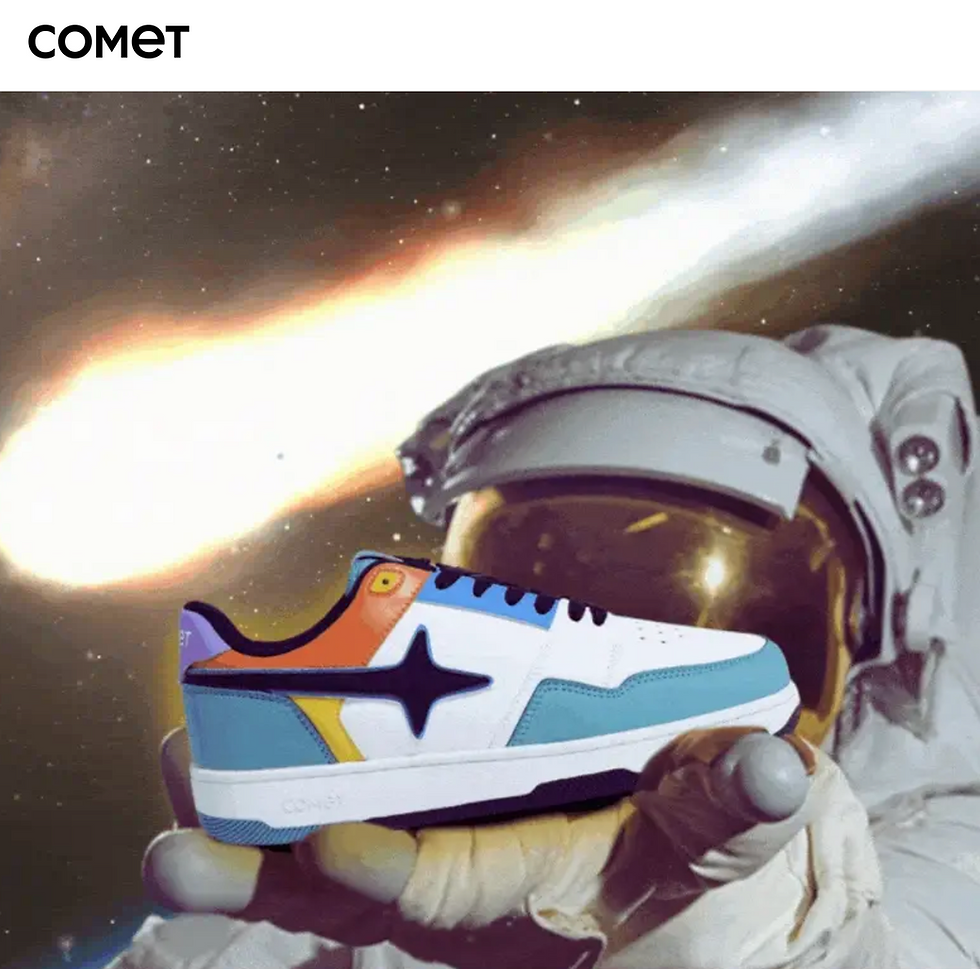
Comet: targeting ₹5,000–10,000, with a brand narrative centred on design and identity for young Indian consumers. "For them, sneakers are less about functionality and more about identity, individuality, and self-expression," says co-founder Utkarsh Gupta.
Gully Labs: built around Indian cultural motifs, Diwali-inspired designs, region-specific narratives, and collaborations that build emotional connection rather than just aesthetic appeal. "Consumers are not just buying shoes anymore, they are buying stories that reflect who they are and where they come from," says co-founder Arjun Singh.

Neeman's: the most credentialed sustainability play in Indian footwear, using merino wool, bamboo, organic cotton, and recycled PET in its product lines. The brand is projected to close FY 2025-26 with revenues of around ₹180 crore and is targeting ₹500 crore over the next two years, backed by a Series B2 round in December 2025 with investors including Harsh Mariwala's Sharrp Ventures and Anicut Capital. The brand is targeting 100 stores by FY 2026-27 through a franchise-led expansion model.

TENxYOU: backed by Sachin Tendulkar, focused on performance-inspired footwear. The brand reports the steepest growth in demand above the ₹3,000 price point.

The resale infrastructure is maturing in parallel. Crepdog Crew (CDC) recorded nearly 100 per cent growth over the past year and targets ₹200 crore in revenue for FY26.
Hypefly reports average order values of ₹20,000–25,000 in Tier-1 cities. Tier-2 markets are entering the category through lifestyle sneakers at ₹5,000–7,000, broadening the consumer base beyond metro early adopters.
The acquisition of sneaker startup Solethreads by Mirza International signals category maturation: incumbents are buying growth rather than building it.
The global sneaker playbook is arriving in India. The most interesting Indian brands are not copying it. They are rewriting it with cultural specificity that global brands cannot replicate from the outside.
Retail Detail covers India retail and global brand strategy every week. Subscribe free at world-one.beehiiv.com and get the Friday edition in your inbox.
Three Implications for Retail Brand Strategy
1. Scarcity only holds when the design conviction is real
The Vans x Satoshi Nakamoto drop earned a 4x resale premium not because it was limited, but because it was limited and extraordinary. Manufactured scarcity without genuine design quality is a one-drop strategy: it creates a spike, not a brand. The brands that sustain secondary market premiums over time are the ones where the product genuinely earns it. This applies equally to Indian brands building in the premium segment: the ₹5,000 price point requires a product that justifies ₹5,000, not one that merely costs it.
2. The most powerful collaborations come from unexpected cultural alignment
A crypto-culture design collective and a skateboarding brand. Nobody predicted that pairing, which is precisely why it worked. The collaboration model has shifted away from the biggest name toward the most conceptually aligned pairing. For Indian brands, this is a structural advantage: deep cultural specificity (regional narratives, festival design, local motifs) is territory that global brands cannot credibly enter. The brands that activate this authentically through omnichannel launch strategy will compound it into lasting brand equity.
3. The consumer has become a participant in the product, not just a buyer of it
The tearaway upper that reveals a pattern beneath is not a design gimmick. It is a statement about where creative authority sits. The brand initiates. The wearer completes. That shift, from brand-as-author to consumer-as-co-creator, is not confined to sneakers. It is showing up in food, beauty, home, and technology. Understanding how brand identity systems are built to accommodate this kind of consumer participation is increasingly the work of building a durable brand.
Frequently Asked Questions
What is the sneaker resale market and why does it matter for retail brands?
The sneaker resale market — platforms like GOAT, StockX, and in India, Crepdog Crew and Hypefly — allows consumers to buy and sell limited-edition footwear at prices set by demand, not retail. It matters for brand strategy because secondary market pricing is now a real-time signal of brand desirability. A 4x resale premium indicates genuine cultural resonance, not just a successful promotion.
How does a limited-edition drop strategy work?
A drop strategy combines limited inventory, a timed release, and high-intent demand to create concentrated cultural moments. The playbook originated with the Nike SB Dunk "NYC Pigeon" in 2005: 150 pairs, immediate riot, instant secondary market. It works when scarcity is paired with a product that earns it. Without genuine design conviction, manufactured scarcity produces a short spike and erodes brand trust over time.
Which Indian sneaker brands are growing fastest in 2026?
The fastest-growing homegrown brands include Comet, Gully Labs, ARKS, TENxYOU, and Louis Stitch, all operating in the ₹3,000–10,000 accessible premium segment. The resale platform Crepdog Crew reported nearly 100 per cent year-on-year growth. The overall Indian sneaker market is approximately $4 billion and projected to approach $6 billion by 2030.
What is the sneaker market size in India?
The Indian sneaker market is estimated at approximately $4 billion in 2026, compared to a global market of $100 billion. Growth is concentrated in the accessible premium segment (₹4,000–9,000) driven by Gen Z consumers, social media discovery, and the rise of streetwear as a lifestyle category rather than a purely athletic one.
What does the Vans x Satoshi Nakamoto drop tell us about brand strategy?
It demonstrates three things: scarcity only earns a premium when the product genuinely deserves it; the strongest collaborations come from unexpected cultural alignment rather than the biggest name; and giving consumers creative agency over the final product creates a more durable brand relationship than the traditional model.
How should Indian retail brands think about the premium sneaker opportunity?
The accessible premium segment between ₹4,000–9,000 is currently underpenetrated by globally credible brands and crowded with undifferentiated domestic product. The brands that combine cultural specificity (design rooted in Indian identity, regional narratives, local collaborations) with genuine quality at this price point are best positioned to own the category as it matures.
The Big Takeaway
The sneaker drop is not a retail anomaly. It is a compressed version of what every brand category is moving toward: products that carry meaning, not just function; scarcity that reflects genuine value, not manufactured urgency; and consumers who participate in the brand rather than simply purchase from it. India is entering this era in footwear at exactly the right moment, with homegrown brands, a maturing resale infrastructure, and a Gen Z consumer base that is already fluent in the logic. The brands that build with cultural specificity and design conviction now will be very difficult to displace later.
The Vans x Satoshi Nakamoto drop is a single data point inside a 200-year pattern: a pattern of products that stop being functional and become cultural, of markets that stop being transactional and become identity-based. India is at the early and consequential stage of that journey in footwear, and the same dynamics are playing out across categories.
The question for every retail brand is the same one it has always been: when your customer makes a choice, what are they actually choosing?
If the answer is the product, you have a good product. If the answer is the story, the identity, the community: you have a brand.
World One Consulting works with retail and consumer brands at the intersection of strategy and execution — helping brands enter new markets, build for scale, and find the commercial clarity needed to compete. Learn more at worldoneconsulting.com.
Recommended reading:
Satoshi Nakamoto x Vans Collab Merges Skate Heritage with Post-Couture | Gear Patrol / MSN
Homegrown Brands Sneak in Larger Share Amid Rising Craze and Demand | Business Standard
India's Sneaker Craze Accelerates — Homegrown Brands and Resale Platforms | Business Standard
How Sneakers Took a Grip on Investment Portfolios | CFA Institute
How Resale Platforms Changed the Sneaker Market | The Lagrange Point / Medium


Comments